Articles
The E. B. Eddy match factory was set up in 1851 on the site of Philemon Wright’s early settlement (circa 1800) called Wrightsville (Hull). Wright built a saw mill and a grist mill here, and was the first to construct a timber and lumber raft which would sail down the Ottawa River past Montreal to Quebec City.
In 1914, Portage-du-Fort suffered a disastrous fire. Many of the buildings that survived the conflagration were built of solid stone. Perhaps the most imposing of them is the Reid House, built in 1899 by Patrick Ratchford, a stonemason from Portage-du-Fort, for businessman George Emmerson Reid.
One of Wakefield’s most splendid Victorian landmarks is also a bed and breakfast. Now known as Les Trois Érables, the house was for many years referred to as the “Doctors” or the “Geggie” home, after two prominent local doctors who lived there in turn.
In the 18th century, Portage-du-Fort was well established as a fur-trading post. The unnavigable part of the Ottawa River here required a 12-kilometre portage.* This village became the commercial centre of the area with the coming of the steamboat. In 1914, a terrible fire destroyed 80% of the buildings in the village.
Home visits by country doctors began to disappear after the turn of the century when centralized health care developed. Dr. Powles’ house, made of local brick, became Shawville’s first hospital between 1916 and 1920.Marks on the floor of the upper tower room show where the operating table stood.
Norway Bay’s 19th century pier was southern Bristol’s ferry link across the Ottawa River to Sand Point, Ontario, providing a connection to the transcontinental railway until 1963. Many settlers moving to western Canada used this route.By the 1850s, summer cottages had begun to spring up along the shores of this inlet on the Ottawa River.
The extraordinary brick houses of Shawville, built for bank managers, wealthy merchants, and professionals in the late 19th century, symbolize the entrepreneurial success of many in this town. The excellent clay near Shawville supplied two brickyards, the first opening in 1865.
Farmers depended on the grist mill from the earliest days in the 17th century. During the French Regime, the seigneur was obligated to build a mill for the use of the habitant. Early English-speakers had to depend upon local entrepreneurs to provide them with a facility to grind their grain.
Spruceholme (204 Principale Street) is the splendid former home of George Bryson Jr. and his wife Helen Craig. Built in 1875, this large stone mansion is said to have been the winter retreat of the Bryson family, who hosted many distinguished guests, including Sir Wilfrid Laurier, the Prime Minister of Canada. Spruceholme is now home to an inn and restaurant.
Driving through the forests and farmland of Pontiac County, one comes upon a large church surrounded by a few houses. Catholic churches in Quebec towns dominate the landscape, but this one is different.The headstones in the adjoining cemetery bear inscriptions such as Doyle, McGuire, Quinn, -- almost all Irish.
Donald Campbell was the founder of Campbell’s Bay. A pioneer farmer, he received his land grant in 1851. He also ran the local saw mill. The coming of the Pontiac Pacific Junction Railway in 1886 gave a boost to the village, and by the 1920s, Campbell’s Bay had become the county seat.
This cheese factory at Stark’s Corners, just east of Portage-du-Fort, is one of many which sprang up in the 1880s and 1890s as the Pontiac shifted from grain crops to dairy farming. This was probably the largest [cheese factory] in the county.
For the greater part of the nineteenth century, Ottawa was claimed to be the lumber capital of Ontario, and perhaps also of Canada.
Summering in the Gatineau has been a pastime for more than a century although, sadly, there is no known record of the first cottage that was built in the valley.
Hot ashes thrown into dry grass in the early afternoon of August 10, 1921, are said to have ignited the fire which started beside Holt’s livery stables, located on the south side of Main Street, just east of Bancroft.
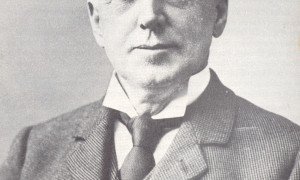
Ezra Butler Eddy, a name long synonymous with the City of Hull, was one of that city’s most successful and influential industrialists. A native of Vermont, E. B. Eddy moved to Hull when he was only twenty-four, bringing with him his modest wooden match manufacturing business. With the help of his wife, Zaida, E.
The steamer lands us at the little village of Portage du Fort, at the foot of the series of rapids down which, from over the falls of the Calumet, the Ottawa thunders. The road, up hill and down gully, which replaces the portage path of ancient days, even now suggests the difficulties which caused this carrying-place to be called “Portage du Fort.”
The original logging camps would start a cut by sending out bush rangers – like Cézar Paul for J. R. Booth on the Coulonge – who would determine the cut. Many former loggers give vivid accounts of their experiences in the bush.
Irish Protestants have made their mark in Quebec both in religion and in economic life. The earliest settlers in the Shawville area were Irish Protestants from County Tipperary who came to Quebec after the Napoleonic Wars. Many Protestants wanted to leave their homeland and find another life away from the constant religious conflict.