Laurentian Heritage WebMagazine

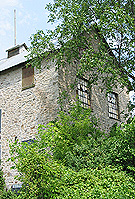
AYERS’ WOOLEN MILL, LACHUTE

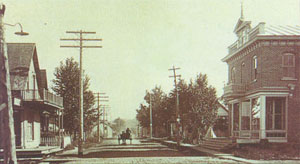
When American Hezekiah Clark arrived in the area of Lachute on the North River in the 1790s with his family and other pioneers, it was a wilderness. Settled by Americans who had been uncomfortable living with seigneurial law, and Scots moving up the North River from the St. Andrews East area, a village soon developed along the river near the rapids. But it wasn’t until the coming of the railway that the village became an important centre.Image retirée.

Ponts couverts des Laurentides, Partie 1

Au début du 20ème siècle, il existait des centaines de ponts couverts partout au Québec. À la grandeur de la province il n’en subsiste, de nos jours, qu’un peu plus de quatre-vingt-dix, certains datant même des années 1950. Dans les Laurentides, plus particulièrement dans les Hautes-Laurentides, on retrouve six ponts couverts et tous, à l’exception d’un, se situent bien au nord de Mont-Tremblant. Du grand temps des ponts couverts, la plupart des villages en avait un, voire plusieurs.

THE AEROBIC CORRIDOR LINEAR PARK

The Aerobic Corridor (“Corridor Aerobique”) is the Laurentians’ second longest linear park. At nearly 60 km in length, it connects Morin Heights in the south to Saint-Rémi-d'Amherst in the north. Like the 200 km “P’tit Train du Nord” trail, which runs roughly parallel, the Aerobic Corridor follows a former railway line, in this case the CN.

Visite de Saint-André-d'Argenteuil (Saint-André-Est et Carillon)

SAINT-ANDRÉ-EST
La municipalité de Saint-André-d’Argenteuil, qui inclut les anciens villages de Saint- André-Est et Carillon offre un cadre enchanteur pour une visite d’un jour ou deux. On y découvre tellement d’édifices patrimoniaux, et dans un cadre tellement enchanteur, que les visiteurs n’auront aucune difficulté à trouver des lieux intéressants.Le moulin. (Photo - Matthew Farfan)