Laurentian Heritage WebMagazine

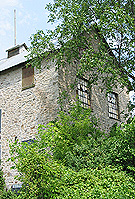
AYERS’ WOOLEN MILL, LACHUTE

When American Hezekiah Clark arrived in the area of Lachute on the North River in the 1790s with his family and other pioneers, it was a wilderness. Settled by Americans who had been uncomfortable living with seigneurial law, and Scots moving up the North River from the St. Andrews East area, a village soon developed along the river near the rapids. But it wasn’t until the coming of the railway that the village became an important centre.Image removed.

COVERED BRIDGES OF THE LAURENTIANS, PART 1

By the beginning of the 20th century, there were hundreds of covered bridges all across Quebec. Today the province numbers just over ninety, some built as late as the 1950s. In the Laurentians, there are six covered bridges, all in the Upper Laurentians, and all except one are well north of Mont Tremblant. In the heyday of the covered bridge, most villages had at least one; some had several. They dotted the back roads as well, crossing brooks and rivers of all sizes. Very few, however, have survived the ravages of time.

THE AEROBIC CORRIDOR LINEAR PARK

The Aerobic Corridor (“Corridor Aerobique”) is the Laurentians’ second longest linear park. At nearly 60 km in length, it connects Morin Heights in the south to Saint-Rémi-d'Amherst in the north. Like the 200 km “P’tit Train du Nord” trail, which runs roughly parallel, the Aerobic Corridor follows a former railway line, in this case the CN.

TOUR OF SAINT-ANDRÉ-D'ARGENTEUIL (ST. ANDREWS EAST & CARILLON)

ST. ANDREWS EAST
The municipality of Saint-André-d’Argenteuil, which includes the former villages of St. Andrews East (Saint- André-Est) and Carillon and the parish of Saint-André-d’Argenteuil, is a wonderful place to spend a day or two. There is so much historic architecture in this area, and amid such a lovely setting, that visitors will have no trouble finding sights to see. Mill.