Articles

--June 15, 2020.
--March 13, 2019.
--February 19, 2018.
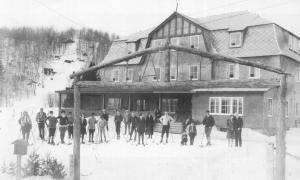
1911 was the year that Emile, born in 1890, escaped the small very rural village in the Canton of Vaud, Switzerland; embarking on the great adventure, a close to penniless immigrant. He had already distinguished himself as an athlete, now he was going to bring skiing to Ste. Agathe.

--December 19, 2017.
--October 3, 2017.
This is a translation of Chapter 2 - HISTOIRE DE Notre-Dame des Sept-Douleurs DE GRENVILLE, P. Q., by Abbé Michel Chamberland, published by Imprimerie de Sourds-Muet, Montreal, Qc, 1931.
--November 23, 2016.
1) d (now Brownsburg-Chatham)
2) c (François-Xavier-Antoine Labelle, sometimes called the "King of the North")
3) a
4) b
5) a
6) a
7) b
8) d
9) b
10) a
--November 23, 2016.
--November 22, 2016.
1) b
2) d
3) b
4) d
5) c
6) a
7) b
8) a
9) c
10) b
--November 22, 2016.
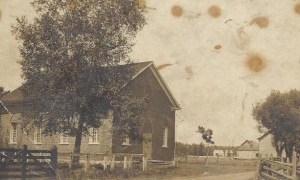
1) This early postcard shows the start of the canal in what Lower Laurentians village?
a) Carillon
b) Grenville
c) St. Andrew's East
d) Rideau
--April 5, 2016.
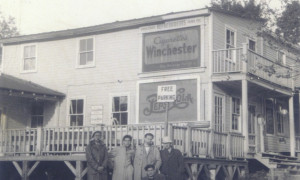
It was not quite dancing in the streets. More accurately, there was a lot of strolling and conversation. Between World Wars I and II Shawbridge was a magnet for the residents of Montreal's teeming Jewish neighbourhoods. Road access was poor but the train made the little community on the lower side of the bridge, across the North River a welcome respite from the city. Shawbridge served as a summer resort destination. There were cottages available to rent weekly or for the season and modest hotel/rooming houses.
The coming of the train in the 1890s ended the almost complete isolation of Morin Township.
The train brought in the first summer, then all year, visitors to Morin and started a lively tourist industry, especially with the development of skiing in the 1920s.
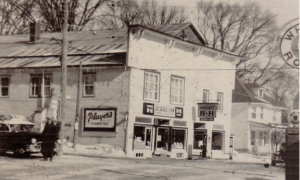
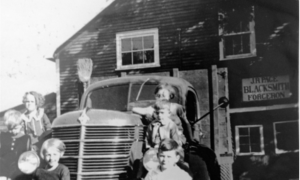
Raoul Pagé bought the blacksmith shop in Morin Heights in 1934.
The establishment was located in the rear of the still-standing house, and Raoul Pagé operated it for several decades.
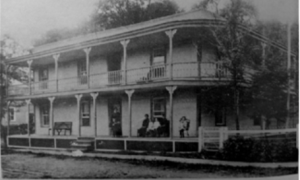
Laurentian Rest was one of several large boarding house
--October 1, 2014.
The following article, titled "Farewell to the Oldest Store in Morin Heights: the Mickey’s Story," was written by David Hodgson and is published by the Morin Heights Historical Association.
Based on interviews conducted last year with Owen and Heidi LeGallee, the article relates the story of the LeGallee family and its part in the history of the town of Morin Heights.
Most Montrealers believe that all of the Irish immigrants to our city arrived at the time of the Irish Famine in 1847, when in reality the ancestors of many of our present day Quebec citizens of Irish descent likely arrived decades before this terrible event.
Val-David іs а unique village оf almost 5,000 inhabitants located іn the Laurentian Mountains аbоut 80km north оf Montreal, Quebec, Canada thаt attracts аbоut 100,000 tourists а year. Val-David іs predominantly Quebecer аnd has а sizable minority anglophone population.

Click here for a podcast by Dwane Wilkin, produced in 2012 as part of QAHN's StoryNet initiative.

As we unravel local history and piece together the contributions of our forebears, we are often amazed at what we uncover.
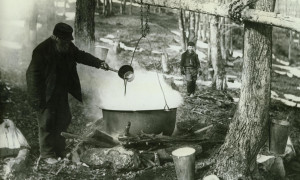
Did you know that maple syrup is the oldest agricultural product in Quebec? It all began with the Indigenous peoples who called it “Sweet Water.” When spring returned and the maple sap was running the Indigenous peoples offered the boiled thickened syrup as a sacrifice to the Great Spirit. “Sugaring off” was largely a woman’s function in Iroquois communities. The men cut notches into tree trunks and small wooden troughs were stuck into the bark.