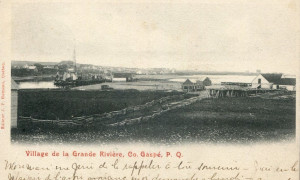
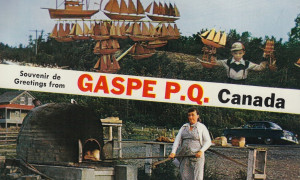
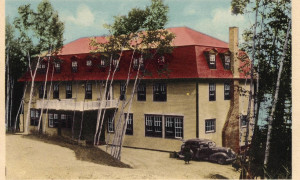
Ancienne carte postale. Éditeur J. P. Garneau, Québec. / Early postcard. Published by J. P. Garneau, Québec.
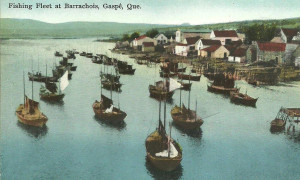
Flottille de pêche, Barrachois, Gaspé, v. 1925. (Collection privée) / Fishing fleet, Barrachois, Gaspé, c.1925.
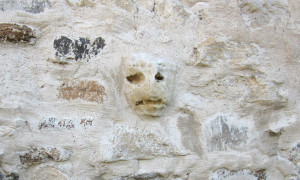
Some years ago, this unusual stone was built into a wall of an old home in Beaconsfield, Quebec.
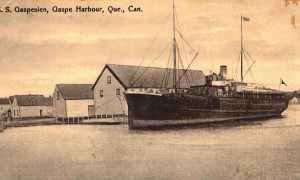
Bateau à vapeur SS Gaspesien, Port de Gaspé, vers 1910. Carte postale ancienne. Collection privée.
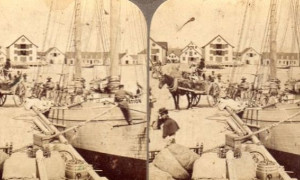
Le quai à Paspébiac, vers 1905. Image stéréoscopique. Collection privée. / Dock in Paspebiac, c.1905.
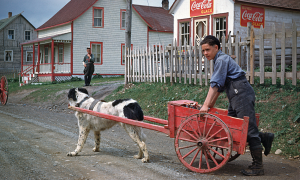
Boy and dog cart, Cape Gaspé, 1948. Photo - Verle F. Brower / courtesy of Bill Bojanowski.
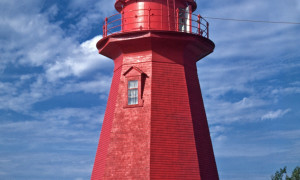
Lighthouse at La Martre, 1948. Photo - Verle F. Brower / courtesy of Bill Bojanowski.
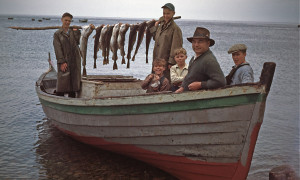
Cod fishermen, Cape Gaspé, 1948. Photo - Verle F. Brower / courtesy of Bill Bojanowski...
Carte postale, vers les années 1950. (Collection privée) / Postcard, c.1950s. (Private collection)
Ancienne carte postale, vers les années 1930. (Collection privée) / Early postcard, c.1930s. (Private collection)