FUNDING OPPORTUNITY!! QAHN is now accepting applications for its SHARE Micro Grant Program, Year 2!
Image:

--April 3, 2025.
--April 3, 2025.
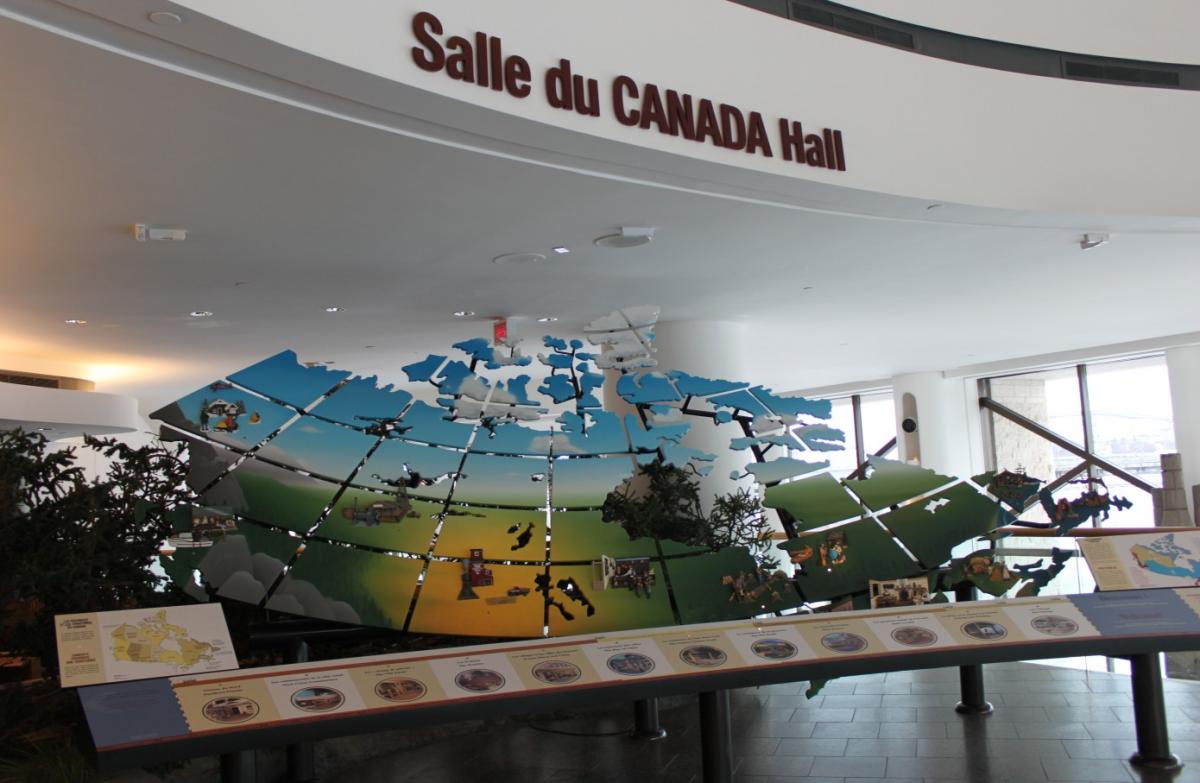 One of the most popular attractions at the Canadian Museum of Civilization in Gatineau, and rightly so, is the larger-than-life historic panorama known as the Canada Hall.

 In Canada, heritage sites may be designated nationally, provincially and municipally. The level of designation depends on the level of significance of the site. National Historic Sites must be judged to be of national significance; provincial, of provincial significance, and so on.
Outaouais Heritage WebMagazine welcomes the submission of articles and photographs. If you have an article or photo for publication on a subject that is relevant to the heritage or history of the Outaouais, you are invited to submit it to the email address below.
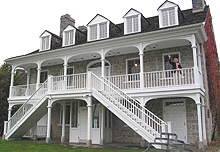 Aylmer -- now a part of the City of Gatineau -- has one of the most impressive concentrations of heritage buildings in Quebec. Many of them date from the first half of the 19th century. Many of them may be found within close proximity of one another in the old village centre.
 (Continued from Part 1)
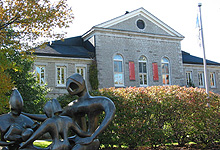
Further up the street is another of Aylmer’s outstanding landmarks. The old Court House (120 Principale Street), built in 1852, is a neo-classical edifice of truly monumental size. At one time, a prison was housed within its walls, and to be lodged there was said to have been a grim experience. The old Court House is now home to the Centre culturel du Vieux-Aylmer.
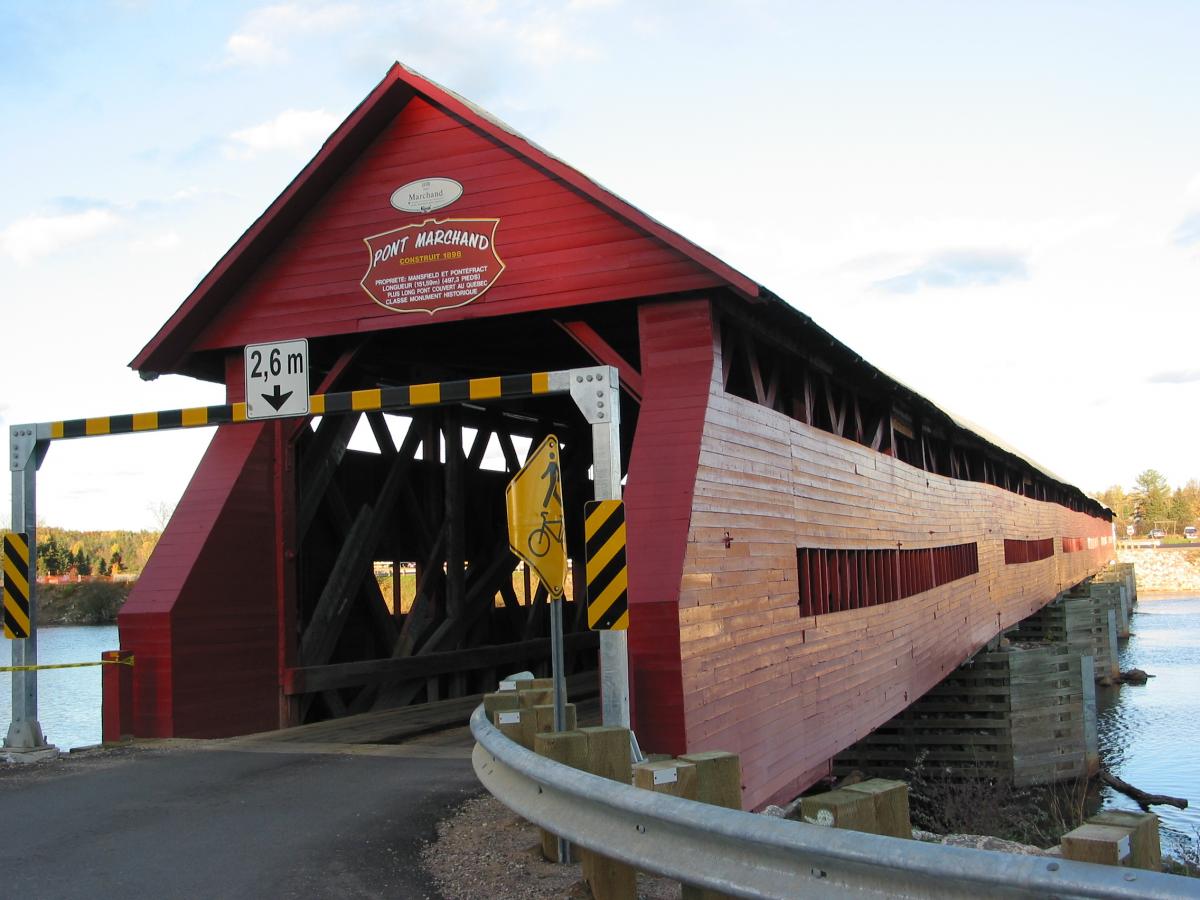 In this age of cement and steel, the massive Marchand covered bridge in Fort Coulonge seems a throwback to an earlier time, a time when building a covered bridge, even one of this magnitude, was a common occurrence.
Wakefield is a small village nestled in the Gatineau hills along the shores of a scenic bay on the Gatineau River. Its main street faces on the river and has not changed much since it was founded mainly by Scottish and Irish pioneers in the early and mid-1800s. This has made the village a popular destination for tourists and visitors with an interest in its heritage, as well as its scenery and its unique opportunities for art expression and outdoor adventure, often arriving from the cities of Ottawa and Gatineau, a half-hour’s drive away.