Articles
--November 23, 2016.
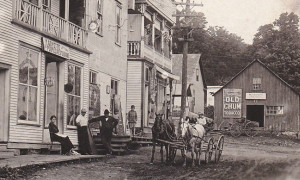
1) d (now Brownsburg-Chatham)
2) c (François-Xavier-Antoine Labelle, sometimes called the "King of the North")
3) a
4) b
5) a
6) a
7) b
8) d
9) b
10) a
--November 23, 2016.
--November 22, 2016.
1) b
2) a
3) b (after George Bryson)
4) c
5) a
6) b
7) a
8) c
9) b
10) d
--November 22, 2016.
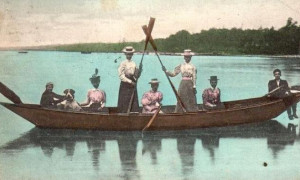
1) This famous turn-of-the-century yacht club occupied a stretch of Ottawa River waterfront in what town?
a) Hull
b) Aylmer
c) Shawville
d) Quyon
--November 22, 2016.
1) b
2) d
3) b
4) d
5) c
6) a
7) b
8) a
9) c
10) b
--November 22, 2016.
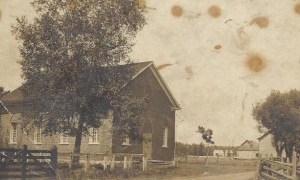
1) This early postcard shows the start of the canal in what Lower Laurentians village?
a) Carillon
b) Grenville
c) St. Andrew's East
d) Rideau
--April 5, 2016.
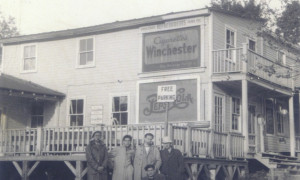
It was not quite dancing in the streets. More accurately, there was a lot of strolling and conversation. Between World Wars I and II Shawbridge was a magnet for the residents of Montreal's teeming Jewish neighbourhoods. Road access was poor but the train made the little community on the lower side of the bridge, across the North River a welcome respite from the city. Shawbridge served as a summer resort destination. There were cottages available to rent weekly or for the season and modest hotel/rooming houses.
--January 8, 2016.
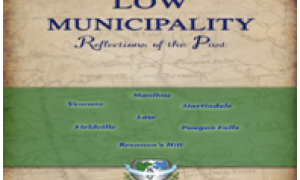
“Low Municipality - Reflections of the Past,” by Don Kealey.
About the Book:
Take a step back in time to the mid 1800s and read about how the Municipality of Low, Quebec, progressed from a logging outpost, to a colonization settlement, to finally an intriguing, vibrant township which included the regions of Brennan's Hill, Venosta, Low, Fieldville and the Manitou.
--December 8, 2015.
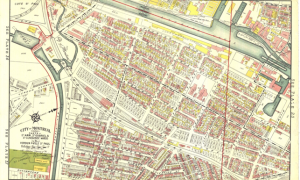
The Victoria Exchange Building, Pointe-Saint-Charles District, Montreal.
History and description of 2551 Rue de Châteauguay, Montréal
(The building number in 1929-30 was 211; in Lovell's Montréal Directory from 1930-31 on it was 2551.)
Pointe-Saint-Charles

October 19, 2015.
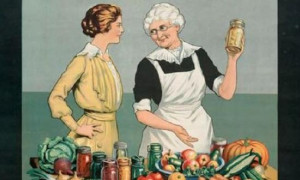
The following is the first instalment in a series written by Sandra Stock, as part of QAHN's project, Housewife Heroines: Anglophone Women at Home in Montreal during World War II, which has been funded through the World War Commemorations Community Fund.
October 13, 2015.
The following is the first installment in a series written by Sandra Stock, as part of QAHN's project, Housewife Heroines: Anglophone Women at Home in Montreal during World War II, which has been funded through the Department of Canadian Heritage's World War Commemorations Community Fund.
--October 8, 2015.
The following is the first installment in a series written by Sandra Stock, as part of QAHN's project, Housewife Heroines: Anglophone Women at Home in Montreal during World War II, which has been funded through the Department of Canadian Heritage's World War Commemorations Community Fund.
The coming of the train in the 1890s ended the almost complete isolation of Morin Township.
The train brought in the first summer, then all year, visitors to Morin and started a lively tourist industry, especially with the development of skiing in the 1920s.
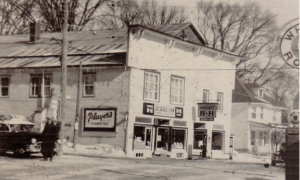
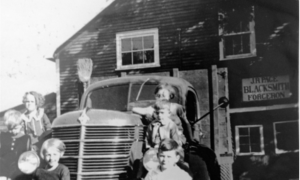
Raoul Pagé bought the blacksmith shop in Morin Heights in 1934.
The establishment was located in the rear of the still-standing house, and Raoul Pagé operated it for several decades.
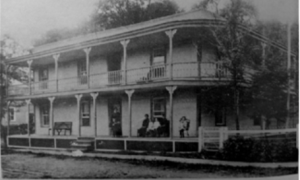
Laurentian Rest was one of several large boarding house
Historic and cultural town
Gaspé - Gespeg: a Micmac word meaning "land's end". More than 15 000 people are living on its territory that extends over 1 440 km2 and 130 km of coastline.
In 1534, the navigator Jacques Cartier from Saint-Malo, then on his first voyage to North America, found a safe harbour in Gaspé Bay. There, he erected a cross by way of taking possession of the territory on behalf of François 1er, King of France. That is why Gaspé is called the "Birthplace of Canada".
--October 1, 2014.
The following article, titled "Farewell to the Oldest Store in Morin Heights: the Mickey’s Story," was written by David Hodgson and is published by the Morin Heights Historical Association.
Based on interviews conducted last year with Owen and Heidi LeGallee, the article relates the story of the LeGallee family and its part in the history of the town of Morin Heights.
Most Montrealers believe that all of the Irish immigrants to our city arrived at the time of the Irish Famine in 1847, when in reality the ancestors of many of our present day Quebec citizens of Irish descent likely arrived decades before this terrible event.
1909
Alfred Miller was guiding a party of timber men up the York River he noticed pieces of rock containing copper at the mouth of little York Lake.
1921 -1922
The five Miller brothers undertake an expedition to discover the location of the rocks that contain copper and their search ends near Copper and Needle mountains.
1932
Mr. I. W. Jones working for the Quebec Government inspected the Miller's claims wrote a report on the area.