Pagé Blacksmith Shop, Morin Heights
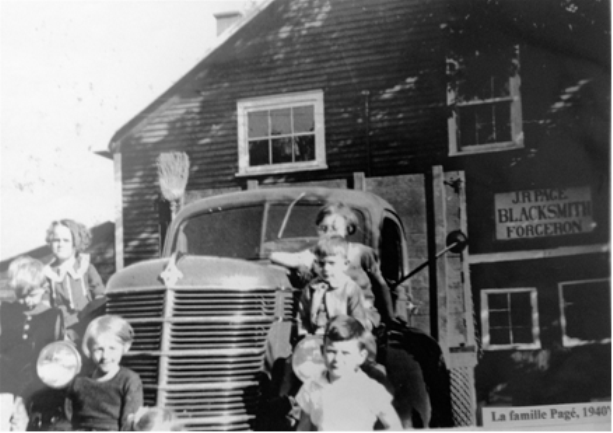 Raoul Pagé bought the blacksmith shop in Morin Heights in 1934.
The establishment was located in the rear of the still-standing house, and Raoul Pagé operated it for several decades.
Raoul Pagé bought the blacksmith shop in Morin Heights in 1934.
The establishment was located in the rear of the still-standing house, and Raoul Pagé operated it for several decades.
 The Story of Sherbrooke's Ingersoll - Rand, commonly just called the Rand, is not only the history of a prolific industry, but a glimpse into the lives of the thousands of men and women who worked there. In Sherbrooke, almost everyone knows someone who worked in the sprawling west-end shops of the Rand.
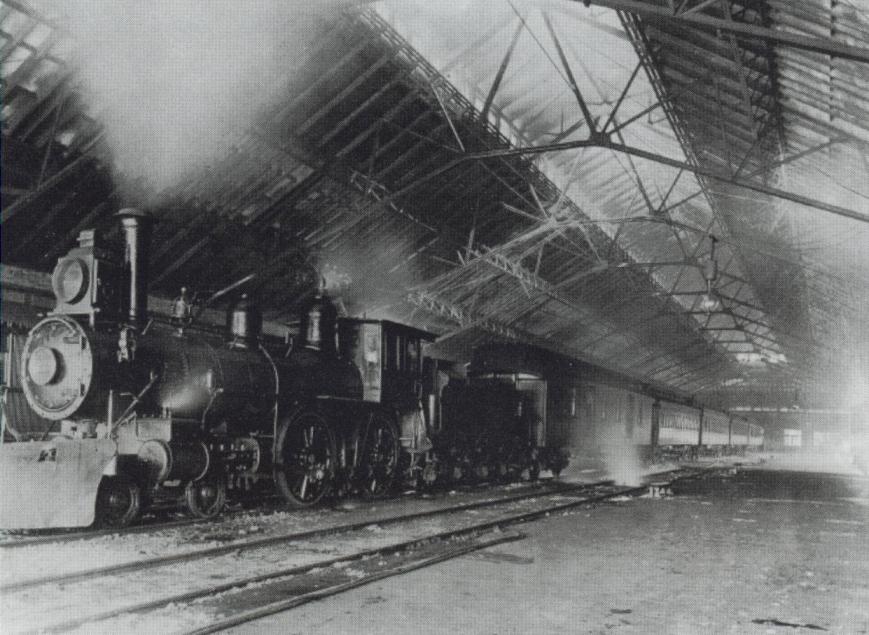 In response to a plan to connect Montreal’s airport to the downtown by diverting the existing CPR tracks around the Bell Centre and old Windsor Station to a new elevated terminus with multi-story commercial and office space, Michael Fish has publicly expressed his opinion that it would be cheaper to demolish the Bell Centre and reopen the old Windsor Station as a commuter
Construit en 1762, toujours en opération et encore mû par la seule force de l’eau, le moulin Légaré est en Amérique du Nord, le plus ancien moulin à farine n’ayant jamais cessé de fonctionner. Le moulin Légaré est aussi la plus ancienne industrie toujours en opération au Canada. Le moulin fut la propriété de la famille Légaré de 1907 à 1978, année où la ville de Saint-Eustache en fait l'acquisition. Depuis 1976, les bâtiments appartiennent à la Ville de Saint-Eustache et en 1978, l'administration du moulin fut confiée à la Corporation du moulin Légaré.
 The Eastern Townships' principal city is Sherbrooke. With a population of 150,000, it dominates the region. Sherbrooke is situated at the confluence of the St. Francis and Magog rivers. In Abenaki times, these two rivers were important navigable waterways for travelling through the region.
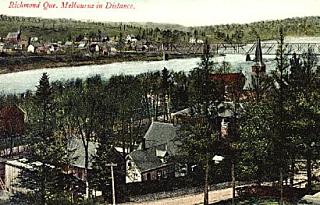 From 1860 to the early 1900s, the St. Francis Valley was the main centre in Canada for the production of slate. At that time, there were no less than ten slate quarries in the area around Richmond, Melbourne, Kingsey, and Danville. Entire villages grew up around the quarries which provided a living to hundreds of workers for the most part from Great Britain.
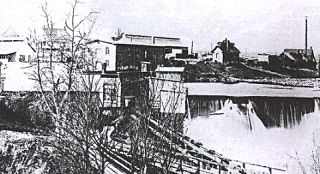 Three components make up the explosive combination of black powder: saltpeter (potassium nitrate), sulphur, and charcoal (carbon). In its heyday, black powder had two primary applications: blasting powder for use in mining operations, and gunpowder for hunting.
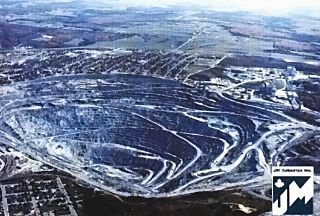 Since about the 1870s, the inhabitants of this area, some twenty kilometres northeast of Richmond, were aware of the strange substance which veined the rocks on a hillside known as "Webb's Ledge." It was a Welsh miner named Evan Williams, who, visiting his parents in 1881, first identified the substance as the mineral asbestos, and recognized its commercial value.