Taproot IV: Poetry, Prose, and Images from the Eastern Townships
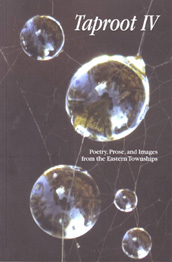 Taproot IV: Poetry, Prose, and Images from the Eastern Townships, the latest edition of a series of anthologies published by Townshippers’ Association, has just been released.
Taproot IV: Poetry, Prose, and Images from the Eastern Townships, the latest edition of a series of anthologies published by Townshippers’ Association, has just been released.
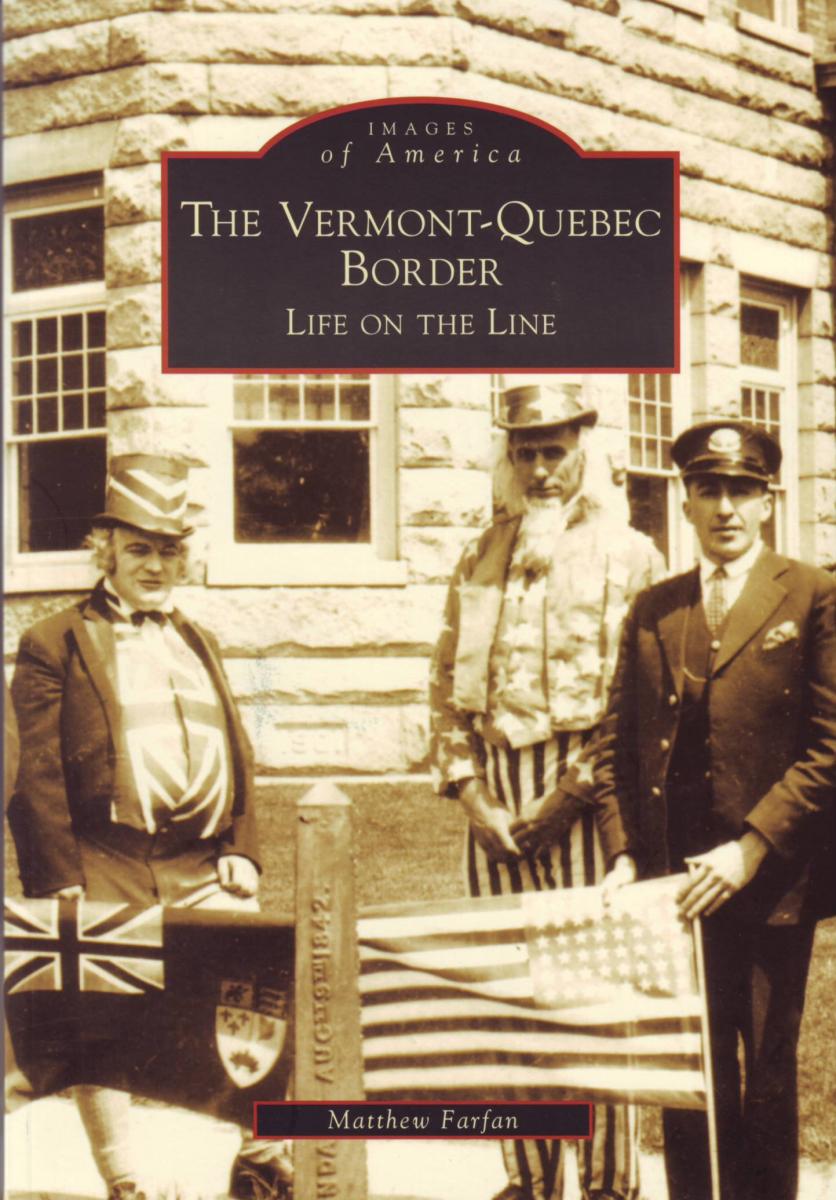 "From Ottawa or Washington this international community is something that can not possibly exist officially. But it does still exist at the community and personal level. Our fire departments […] stand ready at all times to assist one another. Our churches and service clubs see no border when someone is in need.
 “My father bought that gatherin’ tub in 1919, the year he started sugarin’. It was made by a fella name of Odd Aldridge over here in Moe’s River. He was a cooper – made washtubs, barrels, buckets… I tell ya I wouldn’t mind havin’ all the nickels and pennies worth of sap that’s gone through that tub.”
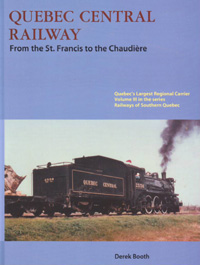 Derek Booth has just released his latest contribution to Quebec’s railway and transportation history. Quebec Central Railway – From the St. Francis to the Chaudière is published by Railfare Books, and is the third volume in Booth’s series “Railways of Southern Quebec.”
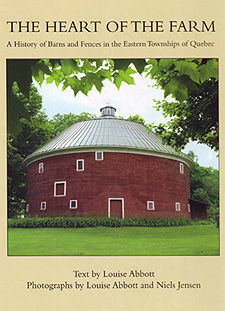 Well known Townships writer and filmmaker Louise Abbott has teamed up with her partner Niels Jensen to produce what will certainly be considered a fine addition to any library of Eastern Townships source material.
 A new publication, titled (in English) Cemeteries of Austin, is now available. Produced in pamphlet format, this 20-page fold-out brochure was researched and written by local historians Serge Wagner and Maurice Langlois, and was published in 2008 by the Austin Cultural Committee.
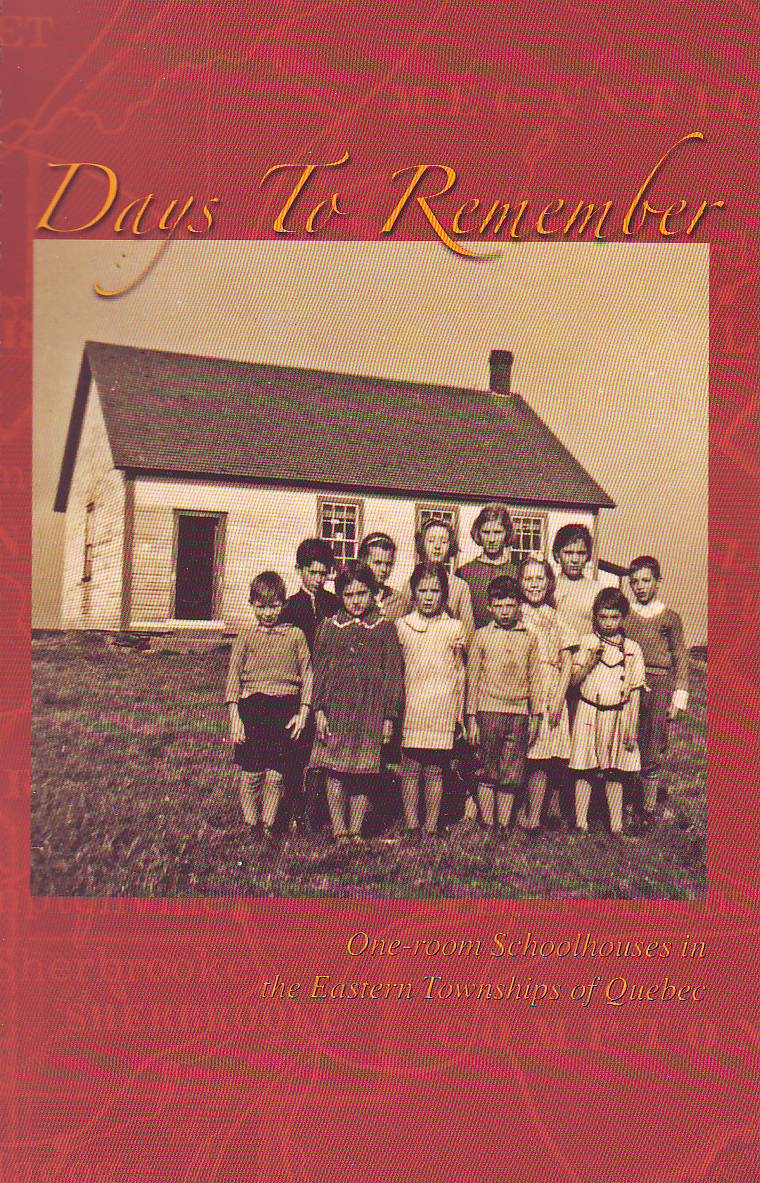 The one-room schoolhouse, so long the focus of folklore and nostalgia, is the subject of a new book. Days to Remember: One-room Schoolhouses in the Eastern Townships of Quebec, is the culmination of years of work by the Canadian Federation of University Women (CFUW), Sherbrooke & District.
Business account books or ledgers from the 19th and early twentieth centuries are a valuable resource for the study of rural history. Historians have used account books to reveal their subjects’ community through the markets they operated in, the people they dealt with, and the goods they produced and consumed. The time that went into creating these ledgers reveals the importance of the daily relationships they recorded.
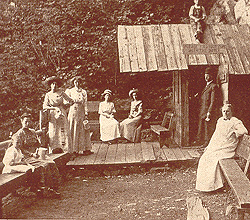 Built in 1875, Potton Springs Hotel and its famous sulphur springs attracted thousands of guests from all over eastern North America. The most important local attraction in its day, the spa had its own railway station and post office.
The conclusion of the American Revolution in 1783 brought forth profound changes to Quebec. The Treaty of Paris negotiated between the United States and Great Britain established the 45th parallel to the south and the span of land to the east, as the boundaries between this part of Quebec and the newly formed republic. In addition to these specific boundary agreements, close to 10,000 displaced persons, wishing to remain loyal to the British Crown chose to immigrate to Canada.